

Sportmaster's operations span virtually all of Eurasia. Its offices, warehouses, and distribution centers are located in Russia, the CIS, Central Asia, and China.
At the start of the project, the company's communications network already included approximately 13,000 users and approximately 16,000 connected devices. This immediately set the scale and requirements for the architecture. With such numbers, using external public tools entails data security risks and the unavailability of some services in certain countries.
Project Background
In 2013, the company's goals were simple: conference calls and mass meetings. Cisco's Webex service provided a complete solution. Secretaries could initiate meetings, and everything worked reliably. But the business grew, and they wanted more. After transforming Microsoft Lync into Skype for Business, the company had a reliable product on the market, marking a significant milestone in communications maturity. Then a global shift began, taking place worldwide. The workforce was changing – it became easier for people to text than to call. Therefore, communications began to shift toward chats.
By the time the pandemic began, the company had already implemented paperless document management, electronic approvals, and distance learning. Within three days, the offices were empty, but work continued, both in the regions and in other countries.
Why Sportmaster Switched to the eXpress Platform
In 2024, the company, having opted for digital communications, faced the limitations of foreign solutions. Microsoft shut down its services, and Webex remained only as a temporary tool, so the question of choosing a new platform arose.
The following criteria were formulated:
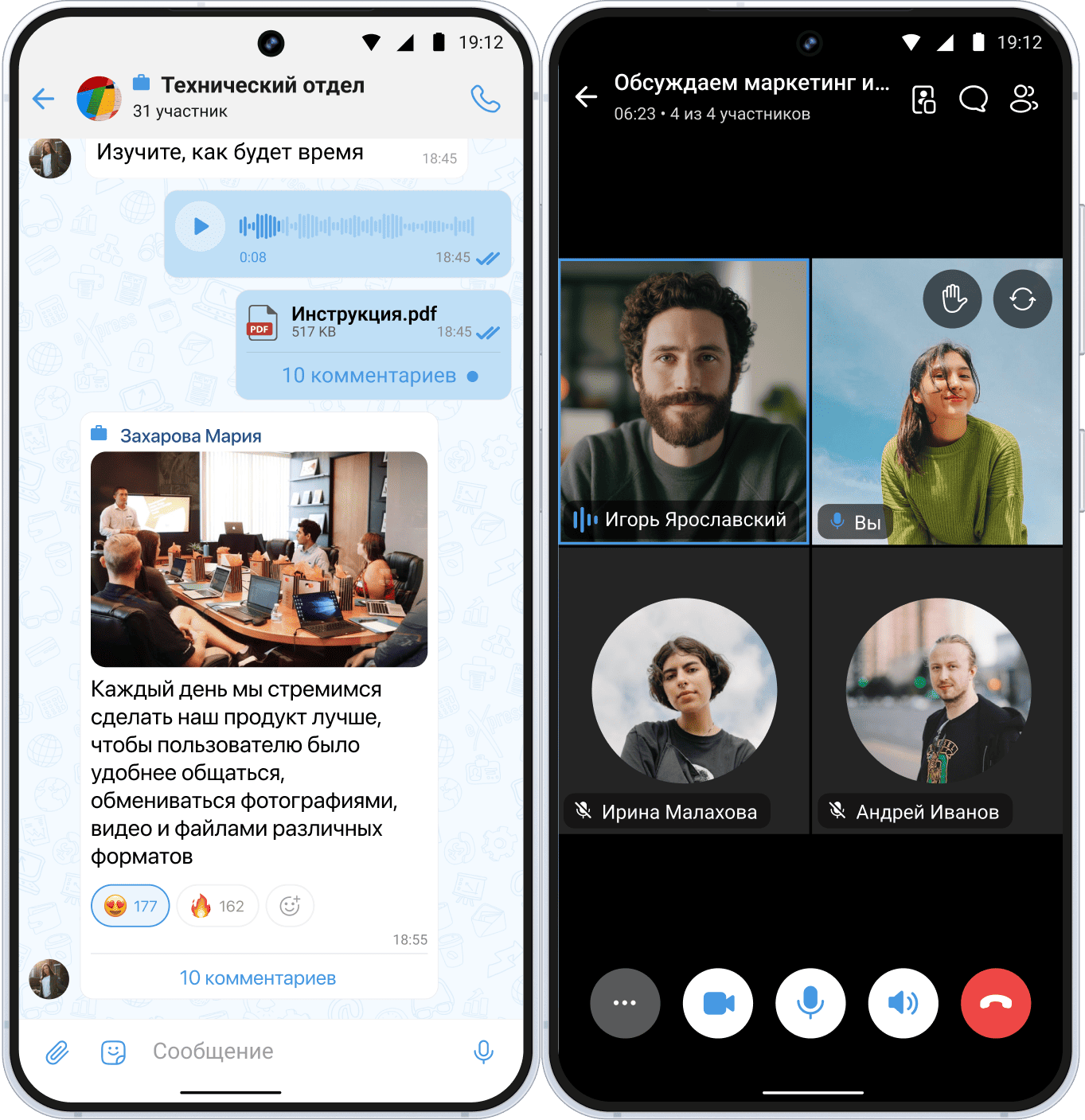
Functionality. Not separate chats, separate calls, and separate video conferences, but a unified, connected environment. From a chat, you can immediately call, discuss a document, share a screen, and continue working in the same context. This fundamentally distinguishes the corporate platform from consumer messengers like WhatsApp* (owned by Meta, which is recognized as extremist and banned in Russia) or Telegram.
Multi-platform. The company uses Linux, macOS, Windows, Android, and iOS simultaneously. Users are located in different countries, on different devices.
Data storage within the company. When communications take place in its own secure environment, the company completely controls access rights. None of the laid-off employees remain in chats, and sensitive information is not leaked outside the company.
Another important factor is independence. For a large enterprise, it's critical to be independent of external solutions and licenses. The entire installation must be managed internally.
International accessibility deserves special attention. For example, working in China. Some messengers there simply don't function when using local SIM cards. For a distributed team, this poses a direct risk of communication disruption. The eXpress platform solved this problem, as it supports Chinese and operates reliably within the local infrastructure.
Architecture and Implementation
The transition to the eXpress corporate platform began at the end of 2024. A federated infrastructure with several large deployment locations was built within Sportmaster's internal infrastructure. This ensured stable communications, information security control, and scalability for high loads.
The project went from launch to pilot groups in 2-3 months. Within four months, the system was already in full production operation. For a company of this size, this is a fast implementation cycle.
A specially branded application was created. Internally, it's known not as eXpress, but by its own name. The platform is integrated with Active Directory, DLP, antivirus, and SIEM systems. The transition from Telegram and WhatsApp* (owned by Meta, which is designated as extremist and banned in Russia) went smoothly, without lengthy training or resistance. employees, since the interface of the eXpress platform is as similar as possible to popular public instant messengers.
Project scale in figures
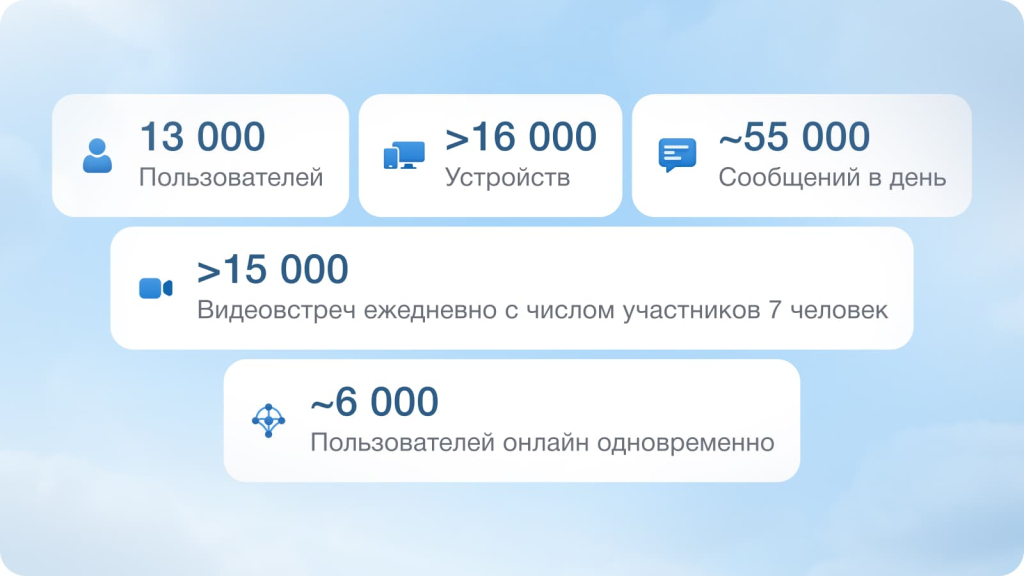
Scope of eXpress platform use as of 2026
Results
As a result, Sportmaster received a unified The communications and information space is under the complete control of its own information security team. The company has abandoned unsecured public messaging apps and foreign solutions, while maintaining the communication format familiar to employees.
Igor Efremov, CEO of Sportmaster Lab LLC (an IT company of the Sportmaster Group), shared details of the project at the TAdviser Summit 2025 conference. A video of his presentation is available on