In February 2026, Roskomnadzor officially confirmed a phased restriction of the Telegram messenger, and the service may become unavailable on April 1. Businesses no longer need to wonder whether it will happen—it's time to act. In this guide, we'll examine the timeline of events, legal risks, and provide step-by-step instructions on how to avoid losing clients due to messenger blocking.

Current situation and legal background
Chronology: How the situation around Telegram developed
August 2025 — Roskomnadzor announced "partial restrictions on calls" to Telegram and WhatsApp*, citing the use of these messaging apps for fraud and terrorism. The agency emphasized that other functions are not affected, and that blocking calls with number substitution on regular networks (the "Antifraud" system) has forced criminals to migrate to messaging apps. November 2025 — The regulator confirmed continued restrictions on WhatsApp*, threatening a complete block if legal requirements are not met. It was emphasized that the restrictions are being introduced gradually to ensure a smooth transition of users to domestic platforms.
February - March 2026 - Minister of Digital Development, 150,000 ignored requests to remove content and deny foreign intelligence services access to Russians' correspondence. On March 5, at a meeting in the Kremlin, Irina Godunova, commander of the Aerospace Forces' communications battalion, called Telegram "an enemy communications tool," and Vladimir Putin publicly supported this position, politicizing the issue. Thus, Roskomnadzor is consistently implementing the strategy of gradual restrictions announced in August 2025, with the possibility of lifting them if the law is observed.
Why Telegram might be blocked: three reasons
- Failure to provide encryption keys – Telegram has refused to hand over the keys to decrypt correspondence to the FSB since 2018. The court order blocking the app remains in effect, and the regulator now has more effective tools for its enforcement.
- Refusal to remove prohibited content (Federal Law 149) — according to the Ministry of Digital Development, the messenger has ignored approximately 150,000 requests to remove illegal information.
- Storing Russian citizens' data abroad (Federal Laws 152 and 236) — Telegram's servers are located outside of Russia, which violates personal data laws. The requirements of the "landing law" (Federal Law 236) regarding opening a representative office in the Russian Federation are also not being met.
Potential Scenarios
The first is slowdown. This is already happening: videos are not loading, calls are freezing. More than 12,000 complaints were recorded on March 15 alone. For businesses, this represents a loss of conversion, but not a catastrophe.
The second option is a complete block of access. A technical restriction, like in 2018, but more effective. Experts call the conflict political.
The third option is designation as an extremist organization. The most severe scenario (similar to Meta (designated as an extremist organization, its activities prohibited in Russia)). State Duma Committee Deputy Chairman Andrei Svintsov allowed for this scenario. Advertising would become illegal, and paying for it would be considered financing extremist activity (Article 282.3 of the Russian Criminal Code).
However, lawyers remind everyone that using the messenger itself is not subject to prosecution. While this scenario is unlikely, it cannot be ruled out.
Business promotion in Telegram
Advertising Status: Important Change
On March 5, 2026, the Federal Antimonopoly Service (FAS) informed Vedomosti that advertising on Telegram violated the law, as restrictive measures were being taken against the messenger. The agency also deemed advertising on WhatsApp* and YouTube illegal. Roskomnadzor quickly agreed with this position, calling its rationale "exhaustive."
However, the very next day, March 6, a contradiction arose. The FAS opened an administrative case against the blogger specifically for advertising on YouTube. However, the agency did not explain why the proceedings were initiated, as there is still no official decision to ban or block YouTube.
This discrepancy has forced the market and the State Duma to demand clarification. President of the Association for the Development of Interactive Advertising(ARIR) Boris Omelnitsky stated that companies do not understand at what point advertising on Telegram will become a violation. Deputies pointed out that the ban on advertising on messaging apps cannot be legal until the platforms are officially recognized as extremist and their operation is banned in Russia.
On March 10, the Federal Antimonopoly Service issued an official clarification that clarified the situation. The agency's press service stated that the advertising ban will only take effect after an official decision to block the resource is made. Until such a decision is made, the ban is formally in effect. At the same time, the Federal Antimonopoly Service confirmed that both the advertiser and the advertising distributor will be held liable for violations if Telegram is blocked in Russia.
Market and Expert Reaction
Despite the clarifications, market participants remain wary. According to various estimates, Telegram could account for up to 50% of the influencer marketing segment in 2025, and together with YouTube, these platforms account for up to 70%. In 2025, this segment was estimated at 50-60 billion rubles.
Media lawyer Svetlana Kuzevanova noted in an interview with Realnoe Vremya that even if the claims are justified, fines are only possible for ads posted after September 1, 2025. "It's clear that not everyone will be fined—the Telegram advertising market is enormous. The authorities simply won't be able to handle such a volume of cases." "The punishments will likely be selective," the expert believes.
Alisa Lisovaya, founder of the SMM agency "Without Water," expressed bewilderment: it turns out that virtually any platform with a Russian audience is potentially considered illegal.
Currently, the situation is as follows:
- There is no official decision to block Telegram, meaning advertising is not legally prohibited.
- However, the precedent with the blogger (the case of March 6) creates legal uncertainty: the FAS has already begun to apply sanctions de facto.
- Fines under Article Article 14.3 of the Code of Administrative Offenses of the Russian Federation for violating advertising laws sets the following penalties: for individuals—50,000–80,000 rubles; for officials and individual entrepreneurs—80,000–150,000 rubles; and for legal entities—200,000–500,000 rubles.
- Businesses and bloggers should closely monitor specific blocking decisions, as they will be the trigger for advertising bans.
Managing Channels: Can I Continue Posting?
Managing a channel and communicating with subscribers on Telegram is not prohibited. This position was established back in 2022 after the blocking of Instagram* and Facebook*. At that time, at a hearing in Moscow's Tverskoy Court, the prosecutor officially stated that the use of Meta* products "should not be considered participation in extremist activity." The court emphasized that Russians will not be held accountable simply for using prohibited services.
Experts confirm that a similar approach will be applied to Telegram if it is deemed extremist. Ordinary users and channel owners will not be held accountable for their mere presence on the platform.
However, on November 1, 2025, a law came into effect requiring owners of channels with over 10,000 subscribers to register with Roskomnadzor. This requirement applies to all social media and messaging apps, including Telegram. Anton Gorelkin, Deputy Chairman of the State Duma Committee on Information Policy, warned that failure to register could result in fines, but these are related to administrative liability for violating information dissemination regulations, not for running a channel itself.
Therefore, it is possible to run a channel on Telegram. The main change for major creators is the need to comply with the registration requirement to avoid administrative sanctions. The content itself (posts, news, and expert opinions) is not prohibited.
Risks for Marketers
Reach Drop
Due to glitches, users are unable to load photos and videos, and message delivery speeds are slowing. In just one day on March 18, 2026, more than 2,500 complaints were recorded across Russia. Users reported problems sending messages, delayed notifications, and difficulties loading media files.
Experts warn that the consequences could be catastrophic for businesses. As Olga Kiseleva, President of the Association of Fitness Industry Operators, noted in an interview with RBC, up to 50% of clients don't answer the phone, and it's difficult to reach them. Losing the ability to reach half of the client base could result in a revenue drop of up to 50%. And Ekaterina Savitskaya, founder of the Buster Bar cosmetics brand, added in the same RBC article that creating new communications links will require investments ranging from hundreds of thousands to millions of rubles, and the sales decline could be 20-25%.
Inability to pay for advertising
In sIf Telegram is designated as an extremist organization, any payments to the messenger could be considered financing a prohibited entity. As experts at the Pepeliaev Group law firm explain, liability under Article 282.3 of the Russian Criminal Code applies to any contribution or donation to an organization designated as extremist. This definition could include not only direct advertising payments but also the purchase of Telegram Premium.
Risk of Channel Loss
After a possible block, access to an account may be lost for various reasons: technical (due to the inability to access it through Russian providers) or legal (if the platform is designated as extremist). Information security experts warn that account access can be lost long before an official block—due to phishing, hacking, or automatic blocking by the vendor.
Telegram has a vulnerability: if an attacker opens an active session, the legitimate owner cannot forcefully reset it within 24 hours, even with two-factor authentication enabled. If a business relies heavily on Telegram, switching to alternative platforms will require 30 to 80% of operational costs for communications and marketing, as it will require duplicating content and maintaining multiple integrations.
It's important to remember: maintaining a channel isn't prohibited, but efforts to develop it may be in vain if access is lost technically or due to a platform block.
Security Strategy
Traffic Diversification
Experts emphasize that large companies are already using multi-channel marketing (email, push notifications, web forms) and will hardly notice any issues with Telegram slowdowns. And according to the Association of Bloggers and Agencies (ABA), 70% of agencies are preparing to move to VK and YouTube.
Contact Database Collection
While you have access to the platform, collect your subscribers' email addresses and phone numbers. This is an asset that will never be blocked. With Telegram's slowdown, customers aren't disappearing—the format for interacting with them is simply changing.
Duplicate content on other platforms
Expand your channels for communicating with your audience, adapting to the new reality. Consider blogging platforms and various messengers that are most popular with your potential customers.
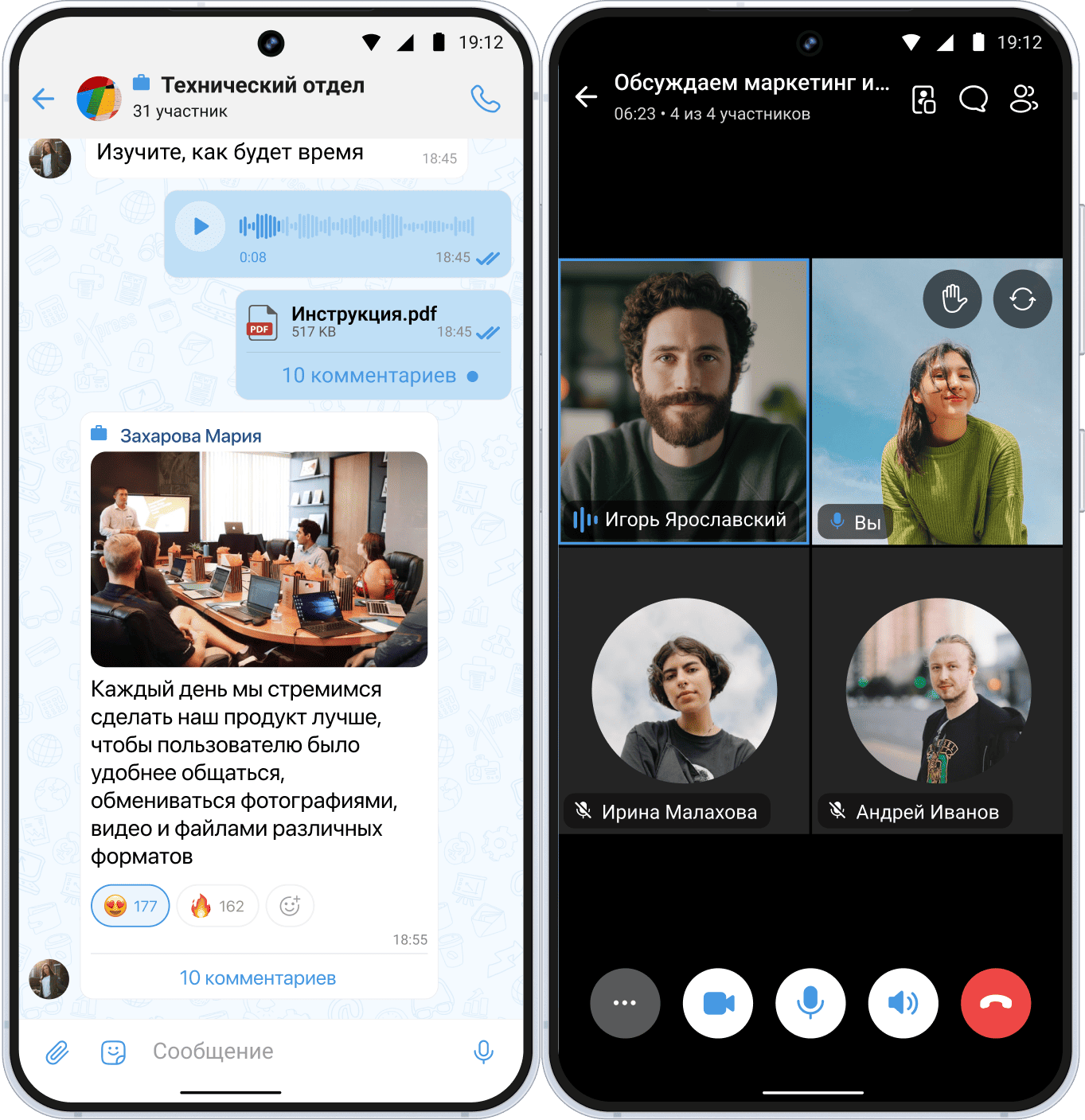
For example, demand for the eXpress messenger is noticeable—in March, the number of registrations in the app increased 3.5 times. You can download the messenger for free or choose a suitable corporate plan.
Working with bloggers: force majeure clauses
Include a clause in your contracts with bloggers regarding blocking messengers as a force majeure circumstance. Major clients are already pausing advertising, and contracts should provide for this option in advance to avoid fines and litigation.
Interaction with clients and employees
Communication with Clients
Risks of Losing Leads
Due to glitches, managers are unable to send commercial proposals on time, and clients are leaving for competitors. In the first few days of February alone, more than 11,000 complaints about Telegram outages were recorded.
Legal nuances: cross-border data transfer (Federal Law No. 152)
New requirements for personal data processing, which the Prosecutor General's Office has drawn attention to, came into effect on June 1, 2025. However, according to Roskomnadzor's clarifications, the transfer of personal data via foreign messaging apps is not considered cross-border if both parties are located in Russia.
However, any website integrations (such as "Write to Telegram" widgets and feedback forms) may transfer data to foreign servers, which requires notification to Roskomnadzor. Sending documents (passports, contracts, invoices) via Telegram is a direct violation of the law, as sensitive data is transmitted over an unsecured channel.
Ban for Certain Categories of Companies
The following organizations listed in the law are subject to the ban on using foreign messengers:
- Government agencies and subordinate organizations
- Bank of Russia, state extra-budgetary fund bodies
- Credit and non-credit financial institutions
- Telecom operators
- Owners of product (service) information aggregators
- Owners of social media platforms with an audience of over 500,000 users per day
- Owners of classifieds services with an audience of over 100,000 users per day
For such companies, the use of Telegram in work processes is now prohibited. Fines reach700,000 rubles. Small and medium-sized businesses are not formally subject to this ban, but there is one recommendation: clients' personal data should not be transmitted through unsecured channels.
Internal Communications (Employees)
Risks of Corporate Information Leaks
Hackers are interested in Telegram for accessing correspondence and files. In 2025, attacks on defense industry companies and government agencies using Telegram phishing were recorded. The messenger is used as a malware control channel, according to Russian media reports.
Problem accessing the knowledge base in chats
Many companies store various regulations and even confidential commercial information in Telegram. If blocked, access to all internal documentation could be lost within a day.
What to do now
Transferring important data to Russian servers/platforms
Russian developers offer tools for migrating work chats and files to domestic corporate messengers. Demand for such services has tripled. The choice of solution depends on the size of the company/team, security requirements, and the industry.
Implementing alternative support channels
Set up independent communication channels with clients:
- Callback widgets from the domestic software registry;
- Classic telephony;
- Omnichannel platforms (Chat2Desk, etc.).
Ensure that contact forms do not transfer data abroad; Roskomnadzor checks this automatically.
Informing clients about backup communication channels
Create a pinned message in the channel with links to Telegram alternatives. Repeat the information in posts. Large companies already operate multichannel and will hardly notice any problems. Those who were only present on Telegram will suffer.
Alternatives and migration plan
There is no complete replacement for Telegram in terms of functionality yet, but a combination of services will cover basic business needs.
Overview of replacement platforms
| Platform | Suitable for | Important information |
|---|---|---|
| eXpress | Corporate communications, personal communications, small and medium businesses | |
| Max | Channels, personal communication, payments | Messenger from VK, actively promoted by the government. Integration with Gosuslugi and the Faster Payment System (FPS), chatbots on GigaChat, files up to 4 GB. The interface is being actively developed, with regular updates. |
| VK Messenger | Communicating with an existing database | Familiar interface, huge VK audience, files up to 4 GB. Cons: no developed ecosystem of channels and bots. |
| VK Teams (VK WorkSpace) | Internal communications | Free, convenient for work chats and document management. Supports on-premises, TLS 1.3 and AES encryption, servers in the Russian Federation. Not suitable for clients. |
| Yandex.Messenger | Teamwork | Integration with Yandex services, voice and video call transcription. Focused on corporate clients. |
The process of audience migration depends on the tasks.
Step-by-step checklist: preparing for the move
- Step 1. Audit of current processes in Telegram
List all business processes tied to Telegram: sales, support, knowledge base, approvals. Large enterprises and regulated industries are most vulnerable. - Step 2. Creating Backup Channels
Create accounts in popular messengers and social networks, create channels and chats, and fill them with content. Provide links in Telegram. Keep in mind that duplicate content can account for 30-80% of costs. - Step 3. Building a Contact Database
Collect subscribers' email addresses and phone numbers through bots or forms.Explain to people why: so they don't get lost. - Step 4. Employee training
Hold a meeting: no personal information in Telegram, important files only in the cloud or corporate messengers, and warn clients about backup channels. - Step 5. Update contracts with contractors
Include a clause blocking messengers as a force majeure event. This will protect against fines if the advertising campaign fails.
Conclusion and FAQ
Blocking Telegram in Russia is not the end of business, but a test of resilience. Companies that diversify their channels, build contact databases, and adhere to legislation are surviving crises unscathed.
Answers to Frequently Asked Questions
Will Telegram be blocked for sure?
It's highly likely that it will be, if the messenger doesn't comply with legal requirements. No one has given a precise timeframe.
What will happen to advertising?
Placing advertising on Telegram has been officially recognized as a violation of the law. Fines for legal entities are up to 500,000 rubles. Large advertising groups are already scaling back their campaigns. Budgets should be diversified.
Are there any fines for using it?
Regular users – no. Businesses face risks when transferring clients' personal data (fines up to 700,000 rubles under Article 13.11 of the Code of Administrative Offenses of the Russian Federation), advertising, or using it in state-owned companies. Running a channel itself is not prohibited—similar to Instagram*.
What to do right now
Start preparing today: conduct an audit, create a backup communication channel or multiple channels, gather contacts, and warn clients. You have time—even if it's short—to be fully prepared for potential restrictions.